I’ve been driving electric vehicles for eight years now. When I started, an EV was a statement of intent—a slightly awkward, tethered existence where you spent half your journey praying for a working rapid charger. Today, the tech has matured, but the psychology of the driver has shifted in a way that’s far more profound.
In a petrol car, you drive until the light pings on, then you find a station. It’s binary. In an EV, you are constantly processing a live data stream. Every time you touch the pedal or turn up the climate control, you are making a choice that echoes through the next fifty miles. This isn't just driving; it’s energy management.
This is why small choices in an EV feel like they have such significant consequences. We aren't just travelling from A to B; we are balancing a finite, visible budget of energy against variables that are constantly trying to drain it.

The dashboard is a mirror, not a map
Most modern EVs provide a range estimate that is, at best, an optimistic guess. The car looks at your driving style over the last ten miles and calculates your remaining range. If you spent the last ten miles crawling through traffic, the car tells you that you’ll reach the moon on your current charge. If you’ve spent those ten miles doing 70mph on the M4, the range drops like a stone.
I’ve learnt to ignore the 'Guess-o-meter' and sanity-check it against the reality of the journey. If I’m heading to the Cotswolds in February, I know that cold air is dense and my battery heater is going to be working overtime. That "small" choice—to leave the cabin temperature at 22°C instead of 19°C—isn't just a comfort setting; it’s a decision that will cost me real, tangible miles.
This is the essence of energy consumption awareness. You stop seeing the road as a sequence of turns and start seeing it as a series of consumption variables.
The anatomy of a road trip: Avoiding the hassles
After nearly a decade behind the wheel of various EVs, I’ve developed a mental list of ‘avoidable hassles.’ These are the tiny, tactical decisions that turn a stressful charge-stop into a non-event. It’s about the risk vs. reward trade-offs you make while cruising.
Take, for instance, the decision to push on to the next charger versus stopping at the current one. If you’re at 15% and the next charger is 40 miles away, you’re betting against wind resistance, traffic flow, and potential charger failure. The reward is arriving sooner. The risk is a flatbed truck on the side of the A1.
Here is how I break down these decisions before I even set off:
A brief guide to managing your road trip variables
Decision Energy Impact Risk Level Hassle Factor Increasing speed (70mph to 75mph) High Low (Range) Low Using full climate control Medium Low None Skipping the next charge stop N/A Extreme Very High Pre-conditioning while plugged in Positive (Savings) Zero Very LowData-driven living: The feedback loop
The feedback loop in an EV is constant. You accelerate, and the consumption bar spikes. You lift off, and you see the regenerative braking start to feed energy back into the pack. This creates a psychological tether between your foot and the car’s capability.
Tools like Zap-Map have become essential in this ecosystem. It’s not just about finding a plug; it’s about reading the crowd-sourced data. If a charger is showing as 'in use' or has recent negative feedback, that small piece of data saves me 20 minutes of anxiety. It allows me to make range planning decisions before the battery percentage starts blinking at me.
Conversely, I spend a fair amount of time on forums like Disqus threads discussing specific car performance. We share data because manufacturers’ claims are often, frankly, fluff. When a fellow owner tells me they lost 25% of their range on a windy day in the Peak District, that’s data I can use. It’s real-world context that a glossy brochure will never give you.
Why do we care so much?
It’s easy to ask: "Why don't you just drive the car?" The answer is that we’ve been conditioned by a century of internal combustion to treat fuel as an infinite resource that can be topped up in three minutes anywhere. When that disappears, we are forced to become data analysts.
The "consequences" we feel aren't actually catastrophic. If you drop to 5% battery, you aren't going to explode. But the perception of consequence is magnified because we have a front-row seat to the energy depletion. We see the numbers dropping in real-time. We see the impact of our heavy right foot on the screen.
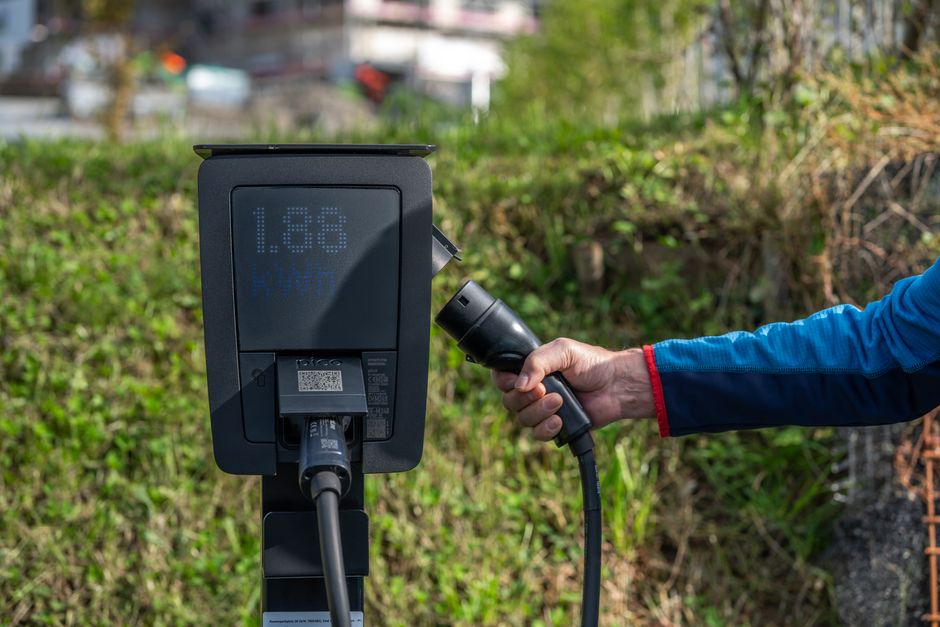
This is a fundamental shift in how we interact with technology. We are moving from passive passengers to active managers of our own transport energy.
Three tips for reducing your mental load
If interactive platform design you’re feeling the strain of "EV anxiety," it’s usually because you’re over-managing the wrong variables. Here is how I keep my own head clear:
- Trust the car’s arrival percentage: Modern sat-navs are getting much better at factoring in elevation and speed. If the car says you’ll arrive with 10%, stop second-guessing it unless the weather is extreme. Use the '10% rule': Never plan a stop that relies on arriving with less than 10% battery. It gives you a buffer for detours, road closures, or that one charger that refuses to handshaking with your car. Stop obsessing over the dash: In the first year, I watched the consumption display every five seconds. It’s a fast track to burnout. Set your route, check your charger status on Zap-Map, and focus on the road instead of the digits.
The bottom line
The small choices, big impact reality of EV ownership is actually a feature, not a bug. It forces you to understand the physics of your journey. It makes you a more conscious traveller. You aren't just driving; you’re navigating the energy landscape.
Are there avoidable hassles? Absolutely. Is it worth the effort? For me, the quiet, efficient glide of an EV makes the occasional bit of mental maths feel like a fair trade. Just remember: the data is there to help you, not to haunt you. Learn to read it, use the right tools, and keep your eyes on the road, not just the range estimate.